Before the Bottle Exists: How Petrochemical Infrastructure Is Seeding America's Waterways with Plastic
The national conversation about ocean plastic pollution tends to focus on what happens after a product is discarded—the mismanaged landfill, the littered beach, the recycling system that fails to close the loop. That framing, however understandable, obscures a more fundamental problem: the plastics supply chain is contaminating American waterways long before a single product reaches a consumer. The industrial infrastructure that manufactures plastic resins, transports polymer pellets, and processes petrochemical feedstocks is itself a significant and chronically under-examined source of aquatic pollution.
This is the upstream problem. And it demands far more scrutiny than it currently receives.
The Gulf Coast Corridor: America's Plastics Manufacturing Heartland
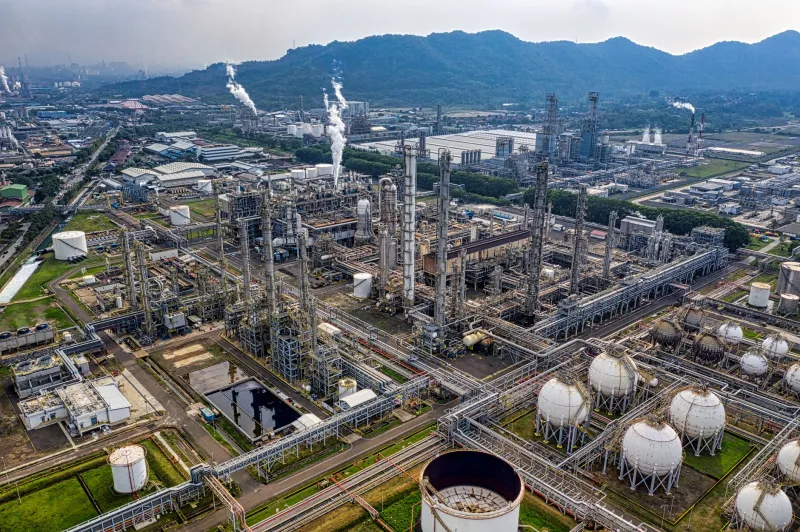
The stretch of coastline running from Louisiana through Texas represents one of the densest concentrations of petrochemical infrastructure on Earth. Refineries, cracker facilities, and resin manufacturing plants line the banks of rivers that flow directly into the Gulf of Mexico. The Mississippi River, which drains roughly 40 percent of the continental United States, passes through this industrial corridor before emptying into the Gulf—carrying with it whatever the corridor releases.
These facilities produce the foundational materials of the plastics economy: polyethylene, polypropylene, polystyrene, and polyvinyl chloride, among others. The production processes involved generate enormous volumes of liquid waste streams, atmospheric emissions that settle into nearby waterways, and solid byproducts that require careful containment. When containment fails—through equipment malfunction, inadequate infrastructure, or deliberate discharge—the consequences travel downstream.
Regulatory data obtained through the Environmental Protection Agency's Toxics Release Inventory program reveals that dozens of facilities in the Gulf Coast corridor report annual releases of plastic-related chemical compounds into surface water. These figures represent only what is formally disclosed; the gap between disclosed releases and actual environmental loading is a subject of ongoing scientific and legal dispute.
Pellets, Powders, and Process Water
The contamination pathways from petrochemical infrastructure are multiple and varied. Plastic resin pellets—the small, lentil-sized granules known as nurdles that serve as the raw material for virtually all manufactured plastic products—escape into waterways at nearly every stage of their production and transport. Stormwater runoff from manufacturing sites carries pellets into drainage systems. Transfer operations between storage silos and transport vehicles generate spillage. Railcar and tanker truck loading terminals, many of which sit adjacent to rivers and coastal waterways, represent particularly high-risk release points.
Beyond pellets, the production of plastic resins generates process water—industrial wastewater that has been in direct contact with polymer materials and their chemical precursors. Treatment of this water before discharge varies considerably across facilities, and the effectiveness of existing treatment technologies in removing microplastic particles from industrial effluent remains limited. Studies published in peer-reviewed environmental science journals have documented elevated microplastic concentrations in surface water bodies proximate to active resin manufacturing sites, consistent with process water discharge as a contributing source.
Atmospheric deposition constitutes a third pathway that is only beginning to receive systematic research attention. Plastic particles generated during manufacturing operations can become airborne, eventually settling into waterways through precipitation and dry deposition. For facilities located near rivers, estuaries, or coastal zones, this pathway may represent a meaningful and essentially continuous source of aquatic contamination.
The Regulatory Architecture and Its Gaps
Federal oversight of industrial plastic releases into waterways is distributed across multiple agencies and statutory frameworks, a structure that creates significant jurisdictional ambiguity and enforcement gaps. The Clean Water Act governs point-source discharges into navigable waters, but its application to microplastic contamination from industrial sources remains underdeveloped. Neither the EPA nor state environmental agencies have established specific effluent limits for microplastic particles in industrial wastewater, meaning that even facilities in full regulatory compliance may be releasing substantial quantities of plastic material into waterways without any legal consequence.
The Resource Conservation and Recovery Act addresses solid waste management but was designed primarily with chemical and hazardous waste in mind; plastic pellet spills and resin dust accumulation at manufacturing sites occupy an uncertain position within its framework. The Comprehensive Environmental Response, Compensation, and Liability Act—the statute that governs Superfund cleanup authority—has similarly not been systematically applied to petrochemical facilities as sources of plastic pollution, even where contamination of adjacent waterways is well-documented.
State-level regulation in the Gulf Coast states has generally not filled these federal gaps. Texas and Louisiana, which host the majority of the nation's petrochemical manufacturing capacity, have historically maintained regulatory environments that prioritize industrial development. Environmental enforcement resources in both states have faced budget constraints that limit inspection frequency and investigative capacity.
Community Exposure and Environmental Justice Dimensions
The communities situated nearest to petrochemical manufacturing infrastructure bear a disproportionate share of the environmental burden these facilities generate. The industrial corridor along the lower Mississippi River, often referred to by residents and advocates as "Cancer Alley," is home to a predominantly Black and low-income population that faces elevated exposure to air and water pollutants from adjacent facilities. The plastic contamination of local waterways used for fishing, recreation, and in some cases drinking water represents a direct harm to communities that have historically had limited political and legal recourse.
This environmental justice dimension is not incidental to the upstream plastic pollution problem—it is central to understanding why the problem has persisted with so little regulatory response. The communities most affected by petrochemical infrastructure have the least institutional power to compel change, while the corporations operating that infrastructure have substantial resources to resist regulatory action.
What a Genuine Upstream Strategy Would Require
Addressing the petrochemical infrastructure pipeline as a source of ocean plastic contamination requires a policy and regulatory response that matches the scale of the problem. Several elements appear essential.
First, the EPA must develop and enforce specific effluent standards for microplastic discharges from industrial facilities, drawing on the best available science to set limits that are protective of aquatic ecosystems and human health. The absence of such standards is not a technical limitation—it is a policy choice that can be reversed.
Second, mandatory reporting requirements for plastic pellet and resin spills should be established at the federal level, analogous to the spill reporting requirements that apply to petroleum releases. Currently, facilities have limited legal obligation to disclose pellet spill events, and the cumulative environmental impact of unreported releases is therefore unknown.
Third, the plastics manufacturing industry should be required to fund independent monitoring of waterway contamination in proximity to production facilities, with data made publicly accessible in real time. Community organizations and independent researchers should have meaningful access to facility sites for environmental sampling.
Finally, any serious national strategy for reducing ocean plastic pollution must grapple with the fundamental tension between expanding petrochemical production capacity and the ecological limits of the waterways that production infrastructure borders. The United States has approved or permitted a substantial expansion of plastics manufacturing capacity over the past decade, much of it concentrated in Gulf Coast states. That expansion trajectory is incompatible with the pollution reduction goals that federal and state governments have publicly endorsed.
The Ocean Begins Upstream
Defending America's oceans from plastic contamination is not solely a matter of improving waste management or changing consumer behavior, important as those interventions may be. It requires confronting the industrial infrastructure at the origin point of the plastics economy. The petrochemical corridor that produces the raw materials for plastic products is not a passive bystander to the ocean plastic crisis—it is an active contributor, operating with insufficient oversight and largely beyond public scrutiny.
The pipeline runs beneath our feet, through our rivers, and into our seas. Recognizing it for what it is—a source of pollution that demands the same accountability we apply to any other industrial contaminant—is the necessary first step toward meaningful reform.