Before It Reaches the Shore: How Retail Supply Chains Are Quietly Flooding America's Watersheds with Plastic
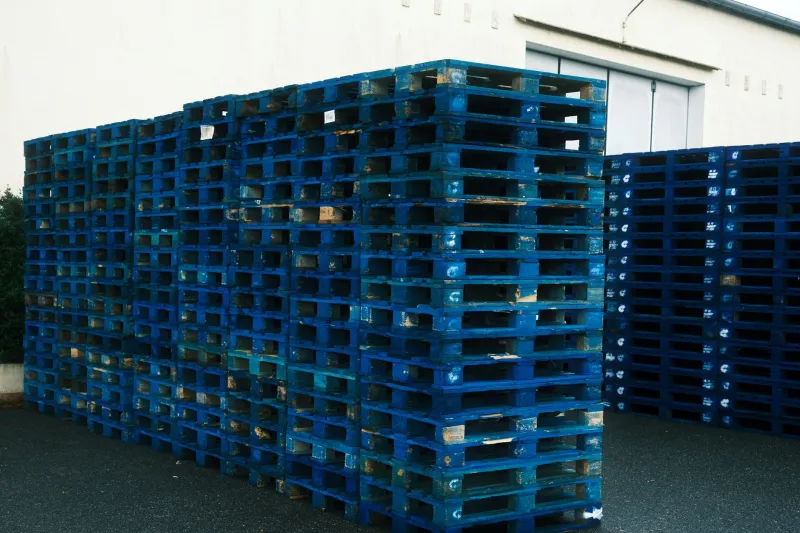
The dominant narrative around ocean plastic pollution tends to place the consumer at the center of the problem. Images of discarded water bottles and tangled grocery bags washing onto coastlines have shaped a generation of public awareness campaigns. Yet a substantial and underappreciated volume of plastic never passes through a consumer's hands at all. It escapes earlier—sometimes far earlier—during the complex, high-speed logistics operations that move goods from overseas manufacturers to the shelves of America's largest retailers.
Understanding this upstream dimension of the plastic crisis is not merely an academic exercise. It is a prerequisite for designing interventions that actually work.
The Invisible Leak: From Factory Gate to Distribution Hub
When a shipment of consumer goods arrives at a U.S. port—whether in Los Angeles, Savannah, or Newark—it is typically encased in multiple layers of plastic packaging. Stretch wrap secures pallets. Polybags protect individual units. Foam inserts cushion fragile items. Strapping bands hold cartons together. In aggregate, a single intermodal container can carry hundreds of pounds of secondary and tertiary plastic packaging that will never be sold, only discarded.
At port facilities and adjacent distribution centers, this packaging is removed at speed. Warehouse throughput is measured in units per hour, and environmental safeguards—where they exist at all—are rarely designed with plastic containment in mind. Lightweight films and polystyrene fragments are particularly prone to wind displacement. Studies examining industrial sites adjacent to waterways have documented significant plastic accumulation in nearby drainage channels, a pattern consistent with what researchers describe as "pre-consumer leakage."
The problem intensifies when facilities are located near rivers or coastal estuaries. Several of the country's largest fulfillment and distribution campuses sit within close proximity to significant water bodies. Amazon's network alone encompasses dozens of facilities near major watersheds, including sites adjacent to the Ohio River corridor and the Chesapeake Bay drainage basin. Walmart, Target, and major third-party logistics operators maintain similarly positioned infrastructure.
Speed as an Environmental Liability
The economic logic of modern retail is fundamentally incompatible with the kind of deliberate, contained plastic management that environmental protection requires. The rise of same-day and next-day delivery has compressed fulfillment timelines to a degree that leaves little room for procedural caution. When a facility is processing tens of thousands of orders per shift, the institutional priority is velocity—and plastic waste management is treated as a downstream concern, not an operational one.
This creates specific vulnerabilities at predictable chokepoints. Outdoor staging areas, where pallets await loading onto delivery vehicles, are rarely enclosed. Compactor areas where packaging is consolidated before disposal are frequently uncovered. Dumpsters and recycling bins positioned near facility perimeters offer minimal resistance to wind events. During heavy rainfall, stormwater runoff from paved distribution lots carries plastic fragments directly into municipal drainage systems—systems that, in most American cities, discharge into rivers without meaningful filtration for solids.
Industry representatives often point to recycling bale programs and sustainability commitments as evidence of responsible management. What these programs rarely address, however, is the plastic that never makes it to the baler—the shrink wrap that blows off a pallet at 2 a.m., the polybag fragment carried by a gust through an open loading bay door, the foam pellet dislodged during unloading and washed into a drainage channel before the next shift begins.
The Regulatory Vacuum
Federal oversight of pre-consumer plastic leakage from retail and logistics operations remains remarkably limited. The Clean Water Act governs stormwater discharges from industrial facilities through the National Pollutant Discharge Elimination System (NPDES), but permit conditions for plastic solids are inconsistently enforced and rarely specific enough to compel meaningful operational change. The Environmental Protection Agency has issued guidance on best management practices for plastic waste at industrial sites, but guidance is not regulation, and compliance is largely voluntary.
State-level frameworks vary considerably. California has moved furthest, with regulations under its Industrial General Permit requiring facilities to implement best management practices for solid waste, including plastics. But even California's framework depends heavily on self-reporting and periodic inspections that critics argue are insufficient given the scale and pace of modern logistics operations. In states with weaker environmental regulatory cultures—particularly those competing aggressively for distribution center investment through tax incentives and permitting flexibility—the gap between policy intent and on-the-ground practice is considerably wider.
The result is a regulatory environment in which major corporations face essentially no binding accountability for the plastic that escapes their facilities before it can be counted, reported, or remediated.
What Accountability Could Look Like
Several policy and industry frameworks offer potential pathways toward meaningful improvement. Extended Producer Responsibility (EPR) legislation, which requires manufacturers and retailers to bear financial responsibility for the end-of-life management of their packaging, is gaining traction in a number of states. Maine and Oregon have enacted EPR laws for packaging, and legislative efforts are active in California, Colorado, and New York. If designed with upstream leakage in mind—rather than focusing exclusively on post-consumer collection—EPR frameworks could create financial incentives for reducing the volume and weight of packaging entering logistics systems in the first place.
Facility-level plastic auditing, modeled on the kind of chemical inventory reporting required under the Emergency Planning and Community Right-to-Know Act, could provide regulators and communities with the data necessary to identify high-risk sites and prioritize enforcement resources. Mandatory containment infrastructure standards for distribution facilities near waterways—enclosed staging areas, covered compactor zones, stormwater filtration requirements—represent a technically achievable intervention that current permitting frameworks do not require.
Some companies are moving voluntarily. Patagonia and a handful of other brands have worked to reduce secondary packaging throughout their supply chains, and several major retailers have committed to eliminating specific packaging formats. But voluntary commitments, as this publication has documented extensively, tend to outpace measurable outcomes by a considerable margin.
The Ocean Begins Upstream
The path that plastic travels from a distribution center in the Midwest to the floor of the Pacific Ocean is neither direct nor dramatic. It moves incrementally—through a drainage channel, into a creek, into a tributary, into a river, and ultimately into the sea. Each step in that journey represents a point at which intervention is possible. Each step also represents a point at which the current system fails.
America's retailers and logistics operators have built supply chains of extraordinary sophistication. They can track individual packages across thousands of miles with real-time precision. They have optimized routes, automated fulfillment, and engineered warehouses to extraordinary efficiency. What they have not done—and what current regulation does not compel them to do—is apply that same rigor to the question of where their plastic goes when it escapes the system.
Until the supply chain is held accountable for its full environmental footprint, including the plastic it loses before consumers ever arrive, the ocean plastic crisis will continue to be addressed at the wrong end of the pipeline.