Invisible and Adrift: The Detection Crisis Keeping Ghost Fishing Gear Hidden in American Waters
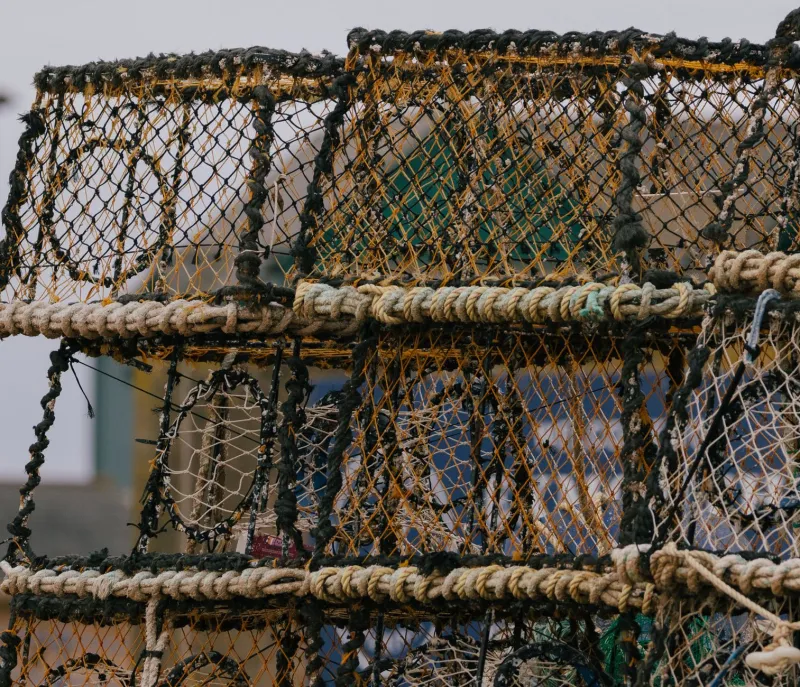
The image is a familiar one in ocean conservation circles: a sea turtle entangled in a drifting net, or a humpback whale trailing hundreds of feet of derelict fishing line. These scenes have become symbols of the ghost gear crisis — the term used to describe fishing equipment that has been lost, abandoned, or discarded at sea. What receives far less attention, however, is the systemic failure that allows this equipment to vanish in the first place.
In American waters, from the Bering Sea to the Gulf of Mexico, ghost fishing gear represents one of the most persistent and least understood sources of ocean plastic pollution. Yet despite years of advocacy and incremental policy movement, the tools used to find and recover this equipment remain startlingly inadequate. The question is no longer simply why ghost gear is dangerous — that case has been made with devastating clarity. The more urgent question is why we still cannot find it.
The Scale of What We Cannot See
Estimates from the Food and Agriculture Organization of the United Nations suggest that roughly 10 percent of all marine litter by weight consists of fishing gear. In American waters alone, the National Oceanic and Atmospheric Administration (NOAA) has documented thousands of derelict crab pots, gill nets, and longlines recovered through funded cleanup programs — and those are only the pieces that were actually located.
The distinction matters enormously. Recovery programs can only address gear that has been identified and mapped. What lies beyond the reach of current detection systems — in deeper offshore zones, tangled in complex reef structures, or slowly disintegrating across vast stretches of open ocean — constitutes a plastic pollution burden that no existing database has accurately captured.
The materials themselves compound the problem. Modern commercial fishing gear is engineered for durability, constructed from high-density polyethylene, nylon, and polypropylene that can persist in marine environments for centuries. As it breaks down, it fragments into microplastics that disperse into the water column and sediment, entering the food chain at every trophic level. Tracking intact gear is difficult enough; tracking its molecular afterlife is a challenge that current science has barely begun to address.
Why Monitoring Systems Fall Short
The regulatory architecture governing fishing gear in the United States is fragmented in ways that create significant accountability gaps. Vessel Monitoring Systems, which track the movements of commercial fishing boats, do not record where gear is deployed or, critically, whether it is ever retrieved. Logbook requirements vary by fishery type and region, and self-reporting of gear loss — while mandated in some contexts — is inconsistently enforced and frequently incomplete.
State and federal jurisdictional boundaries introduce additional complexity. Gear lost in federal waters may drift into state-managed zones, where different agencies hold authority and different funding streams apply. The result is a patchwork of oversight that no single entity is positioned to reconcile into a coherent national picture.
Subsurface gear presents particular challenges. Crab and lobster traps that have lost their surface buoys sink to the seafloor and become effectively invisible to aerial and vessel-based surveys. Gill nets, designed to be nearly transparent even when new, become even harder to detect as biofouling accumulates and causes them to sink below the photic zone. In turbid coastal waters common along the Atlantic and Gulf coasts, visual detection from the surface becomes essentially impossible beyond a few feet of depth.
Technologies on the Horizon
A growing coalition of researchers, technology developers, and conservation organizations is working to close these detection gaps, and the emerging toolkit is genuinely promising — though still far from deployment at scale.
Satellite synthetic aperture radar (SAR) has demonstrated the ability to detect large surface debris fields, including floating net aggregations, under a range of weather conditions that would defeat optical imaging. Projects piloting this technology in partnership with NOAA have shown encouraging results in the Pacific, where large-scale drifting net fragments from distant-water fisheries periodically accumulate in predictable current convergence zones.
Acoustic technologies offer a different pathway for subsurface detection. Side-scan sonar and multibeam echo sounders, long used in hydrographic surveying, are increasingly being adapted for debris detection in coastal and nearshore environments. Several university research programs along the West Coast are developing machine-learning algorithms trained to distinguish the acoustic signature of derelict traps and entangled gear from natural seafloor features — a capability that could dramatically accelerate targeted recovery operations.
Passive acoustic monitoring, which records the sounds of marine environments continuously over time, is also being explored as an indirect detection method. Derelict gear interacting with currents, marine mammals, and vessel traffic generates distinctive acoustic signatures that trained models may eventually be able to isolate and geolocate.
Biodegradable gear materials represent a parallel front. The fishing industry and materials scientists are collaborating on trap panels and line segments engineered to degrade within predictable timeframes when submerged, reducing the persistence of lost gear even when recovery is impossible. Regulatory incentives for adopting these materials, however, remain limited.
Communities Filling the Gap
In the absence of comprehensive federal detection infrastructure, coastal communities have increasingly developed their own monitoring capacities. In the Pacific Northwest, tribal nations with treaty fishing rights have established gear monitoring programs as part of broader fisheries stewardship responsibilities, documenting derelict gear locations and coordinating removal with state agencies. Along the Gulf Coast, commercial shrimpers and recreational fishing associations have created informal reporting networks that channel gear sighting data to regional cleanup coordinators.
Citizen science platforms have expanded this capacity further. Programs that allow recreational divers, kayakers, and beachcombers to log gear sightings through standardized mobile applications are generating spatial datasets that no agency survey could replicate at comparable cost. The challenge lies in standardizing these inputs sufficiently to produce actionable intelligence — a data quality problem that several academic partnerships are actively working to solve.
These community-led efforts are not a substitute for well-funded, technologically sophisticated federal monitoring. But they reveal something important: the knowledge needed to find ghost gear often already exists at the local level. The missing infrastructure is not observation — it is the aggregation, verification, and institutional response that would transform those observations into recoveries.
The Path Forward
Addressing the ghost gear detection crisis requires investment on multiple simultaneous fronts. Federal agencies must expand funding for technology development and deployment, particularly for subsurface detection in high-priority fisheries. Reporting requirements must be standardized and enforced across vessel classes and fishery types. And the data collected through citizen science and community monitoring programs must be integrated into official response frameworks rather than remaining siloed in nonprofit databases.
The plastic that ghost gear introduces into American waters does not remain in place. It migrates, fragments, and eventually becomes indistinguishable from the broader microplastic burden contaminating our coastlines and seafood supply. Every piece of derelict gear that goes undetected is a pollution source that compounds over decades.
Finding what is lost is the necessary first step. The technology to do so is within reach. What remains is the institutional will to build the systems that make detection — and recovery — routine rather than exceptional.