Shoreline Archaeology: How Eroding American Coastlines Are Exhuming Generations of Plastic Burial
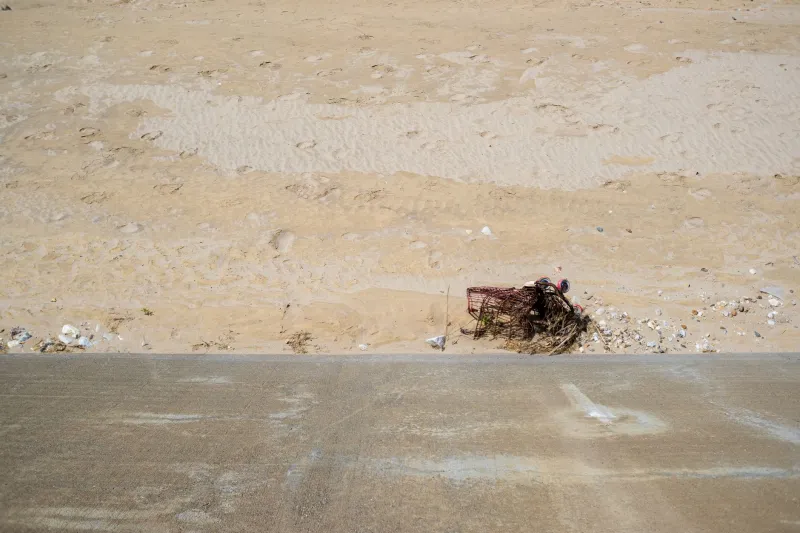
For most visitors, a beach is a place of renewal — tides that erase footprints overnight, sand that feels perpetually fresh. That perception, it turns out, has always been a polite fiction. Beneath the surface of some of America's most cherished shorelines, layers of plastic waste have been quietly accumulating for more than half a century, compressed by sediment, hidden by seasonal sand drift, and largely ignored by the environmental frameworks designed to address ocean pollution. Now, accelerating coastal erosion driven by sea level rise is peeling back that concealment — and what is emerging challenges nearly every assumption the cleanup industry has built its mission upon.
The Archive Beneath the Sand
Coastal geologists refer to the phenomenon informally as "plastic stratigraphy" — the layered deposition of synthetic debris within beach sediment profiles. Much as an archaeologist reads human history through pottery shards and charcoal deposits, researchers are now mapping the chronology of American plastic consumption through the fragments eroding out of bluff faces and tidal zones along the Atlantic, Gulf, and Pacific coasts.
Dr. Miriam Calloway, a coastal sedimentologist who has studied erosion patterns along the New Jersey shoreline for over fifteen years, describes the experience of examining a freshly cut bluff face as "reading a confession." Rigid polystyrene fragments from the 1970s sit alongside degraded polyethylene film from the 1980s and intact bottle caps from the early 2000s. Each layer corresponds not to a natural geological epoch but to a specific chapter of American plastic manufacturing and disposal culture.
"The beach didn't absorb this material passively," Calloway notes. "Much of what we're finding reflects deliberate or semi-deliberate disposal — beach dumping that predates modern environmental regulation, combined with decades of inadequate stormwater management that funneled inland waste to the coast."
Which Beaches Are Most Exposed
Not all American shorelines face equal vulnerability. The beaches most aggressively exhuming buried plastic share a common profile: high historical visitor density, proximity to urban centers, and coastlines composed of barrier islands or sandy bluffs that erode rapidly under wave action.
The barrier island chains of New Jersey and the Carolinas have drawn particular scientific attention. So have portions of Long Island's south shore, the Gulf Coast beaches of Mississippi and Alabama, and sections of Southern California's Santa Monica Bay coastline. In each of these areas, erosion rates have measurably accelerated over the past two decades, and the sediment being lost is not clean — it is laced with legacy plastic that was buried before the Environmental Protection Agency had the regulatory tools or the political mandate to prevent it.
Marine archaeologist Dr. Thomas Farris, who has documented buried waste sites along the Gulf Coast, emphasizes that the scale of what lies beneath is not well understood even by specialists. "We have almost no systematic baseline data on subsurface plastic concentrations at American beaches," he explains. "Our cleanup efforts have focused almost entirely on surface and floating debris. The buried inventory is essentially unknown, and erosion is conducting the inventory for us — one storm at a time."
What Erosion Reveals About Cleanup Orthodoxy
The emergence of buried plastic carries a pointed implication for the ocean cleanup sector: the problem is not simply one of removal, but of depth. Organizations that deploy surface skimmers, beach raking equipment, and volunteer collection brigades are, in a meaningful sense, addressing the top of an iceberg whose submerged mass is only now becoming visible.
This is not a criticism of cleanup work itself — every kilogram of plastic diverted from the marine environment matters. But the stratigraphic record being exposed along American coastlines suggests that the cumulative volume of plastic embedded in coastal systems vastly exceeds what any remediation program has ever accounted for. When erosion liberates buried material, it re-enters the active marine environment as secondary pollution, often already fragmented into microplastic particles that are far more difficult to intercept than the intact objects from which they originated.
The chemical dimension compounds the concern. Plastics buried for decades have undergone complex degradation processes in an anoxic sediment environment, potentially concentrating legacy additives — plasticizers, flame retardants, UV stabilizers — into the particles now being released. Marine toxicologists note that the ecotoxicological profile of this re-emergent material is poorly characterized and may differ substantially from freshly produced plastic debris.
The Case for Upstream Intervention
What coastal erosion is forcing into view is, ultimately, a historical accounting. The plastic now emerging from American beach sediment was manufactured, sold, used, and discarded within a system that had no coherent mechanism for preventing its migration to the coast. That system has been reformed at the margins — single-use bans in some jurisdictions, improved stormwater filtration in others — but its fundamental architecture remains largely intact.
Dr. Calloway argues that the lesson of plastic stratigraphy is not that beaches need more aggressive raking. It is that the production pipeline feeding the next generation of buried layers must be interrupted. "Every piece of plastic we're digging out of a New Jersey bluff today was a policy failure thirty or forty years ago," she says. "The question is whether we're willing to make different choices now, or whether we're content to let the beaches of 2060 tell the same story."
That framing aligns with a growing body of scientific and policy opinion that positions upstream prevention — extended producer responsibility, material substitution, elimination of single-use formats — as categorically more effective than downstream recovery at the scale the problem demands.
Rethinking the Cleanup Narrative
There is something genuinely disorienting about the image of a beach eroding to reveal its own buried history. Americans have long associated shoreline cleanup with progress — a tangible, photogenic act of environmental stewardship. The stratigraphic record complicates that narrative in ways the cleanup sector has been slow to absorb.
Progress measured in bags of collected surface debris does not account for the submerged inventory that erosion is methodically returning to circulation. It does not reflect the decades of compounding deposition that preceded current regulatory frameworks. And it does not address the upstream production and disposal systems that continue to feed new layers into the sediment column.
The beaches themselves are doing something that decades of environmental advocacy struggled to accomplish: making the historical scale of plastic pollution physically visible. Whether that visibility translates into the kind of systemic policy response the moment demands remains, as it so often does in American environmental politics, an open and urgent question.
For those watching the waterline — scientists, advocates, and the communities whose coastlines are literally dissolving — the answer cannot come from shovels and collection bins alone. It must come from the decisions made long before plastic ever reaches the shore.