Farmed and Fouled: The Plastic Pollution Quietly Escaping America's Aquaculture Operations
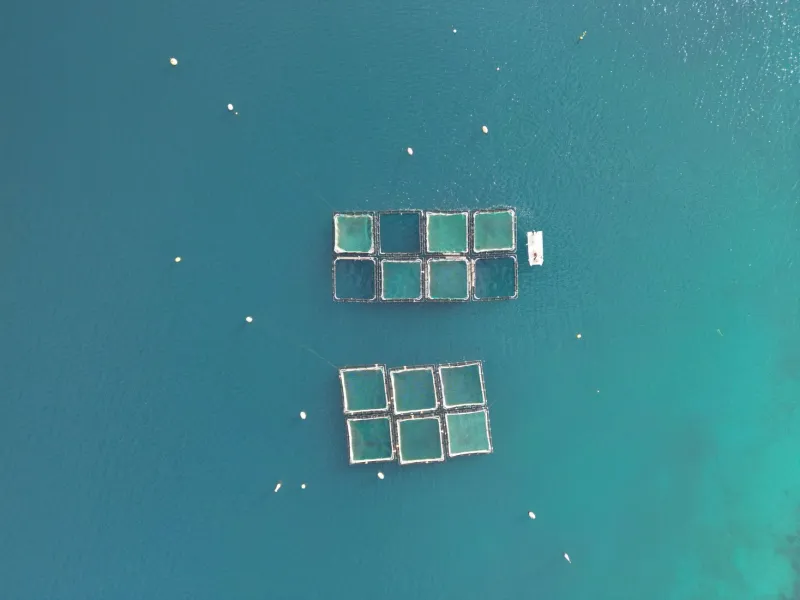
For decades, aquaculture has been positioned as the responsible future of American seafood — a controlled, efficient alternative to the environmental toll of industrial fishing. Shellfish farms along the Pacific Northwest coast, shrimp operations in the Gulf of Mexico, and finfish pens dotting the Atlantic seaboard have all been cast as progress: food production that relieves pressure on wild stocks while meeting rising domestic demand. What that narrative consistently omits is the substantial volume of plastic that these operations introduce into the very waters they depend upon.
The numbers are difficult to ignore once researchers begin looking for them. A 2022 analysis published in the journal Marine Pollution Bulletin estimated that global aquaculture generates hundreds of thousands of metric tons of plastic waste annually, with U.S. operations contributing a disproportionate share relative to their output volume. Nets, buoys, mooring lines, feed bags, antibiotic packaging, cage components, and sorting trays — each of these materials is essential to daily aquaculture operations, and each is manufactured primarily from polymers that persist in marine environments for centuries.
A Supply Chain Built on Plastic
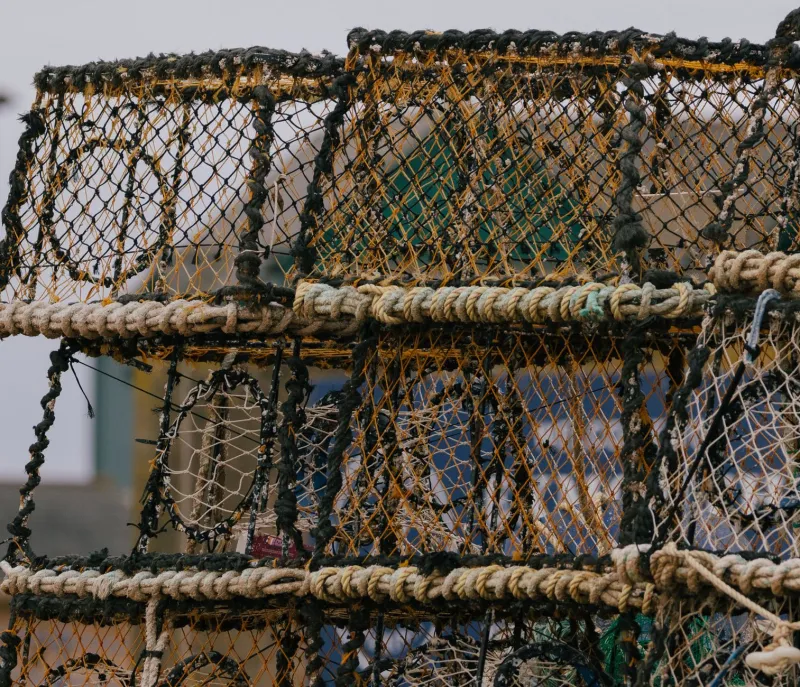
To understand why aquaculture generates so much plastic waste, it is necessary to understand how comprehensively the industry relies on synthetic materials. Open-ocean fish pens, such as those used to raise Atlantic salmon off the coast of Maine, are constructed from high-density polyethylene (HDPE) frames and nylon mesh netting. These structures are engineered to withstand significant wave energy, but they are not indestructible. Abrasion against mooring systems, storm damage, and simple UV degradation cause netting to shed microfibers and fragment over time. A single large-scale salmon pen may contain several tons of netting material, portions of which enter the surrounding water column continuously throughout its operational lifespan.
Oyster and mussel farms, often celebrated as among the most ecologically benign forms of aquaculture, present their own plastic accounting challenges. Longline systems use polypropylene rope, plastic mesh bags, and foam floats — components that must be replaced regularly and that, when discarded or lost, break down into microplastics and nurdles that migrate through tidal systems and into open water. In Washington State's Puget Sound, a region that hosts one of the nation's most productive shellfish industries, researchers have documented elevated concentrations of microplastic particles in sediment samples taken near active farm sites.
Shrimp aquaculture, concentrated heavily along the Gulf Coast, introduces yet another plastic profile. Feed is delivered in multi-layer plastic sacks that are difficult to recycle through conventional municipal streams. Pond liners used in intensive inland shrimp operations are manufactured from reinforced polyethylene sheeting that degrades under prolonged sun exposure, releasing polymer fragments into drainage water that ultimately connects to coastal estuaries.
The Regulatory Vacuum
Perhaps the most troubling dimension of this crisis is not the pollution itself but the institutional indifference that has allowed it to accumulate unchecked. The U.S. aquaculture industry operates under a fragmented regulatory framework divided among the National Oceanic and Atmospheric Administration (NOAA), the Army Corps of Engineers, the Environmental Protection Agency, and individual state agencies. None of these bodies has established binding standards specifically governing plastic waste generation, disposal, or material substitution within aquaculture operations.
Permitting requirements for offshore aquaculture facilities, governed largely by the National Aquaculture Act of 1980 and subsequent executive orders, focus principally on water quality discharges, biological containment, and navigational safety. Plastic material management is treated, at best, as an ancillary consideration. Facilities are generally required to remove decommissioned structures, but there is no enforceable standard for how plastic components must be handled during active operations, nor any requirement to report plastic loss events to regulatory authorities.
"The regulatory framework was designed for a different era and a different set of concerns," said one marine policy researcher at a Pacific Coast university, speaking on background. "Plastic pollution from aquaculture has simply never been treated as a first-order environmental issue, even as the industry has scaled dramatically."
This gap is not merely an administrative oversight. It reflects a broader tendency in U.S. environmental governance to regulate plastic pollution reactively — addressing visible crises such as single-use bag accumulation or nurdle spills — while leaving systemic, diffuse sources to operate without scrutiny.
What Industry Knows and Hasn't Fixed
It would be inaccurate to suggest that the aquaculture industry is universally unaware of its plastic footprint. Several large producers, particularly those operating in export markets with more rigorous environmental standards, have begun voluntary initiatives to audit and reduce plastic waste. Some Pacific salmon operations have piloted copper-alloy mesh alternatives to nylon netting, citing both durability advantages and reduced microfiber shedding. A handful of oyster farmers in the Chesapeake Bay region have partnered with nonprofit organizations to collect and recycle end-of-life plastic gear through specialized marine debris programs.
These efforts are meaningful, but they remain isolated and uncoordinated. Without regulatory incentives or enforceable baselines, the economics of aquaculture consistently favor cheap, disposable plastic over more durable or recoverable alternatives. Nylon netting is inexpensive. Polypropylene rope is abundant. The cost of the plastic that escapes into surrounding waters is externalized entirely — borne by marine ecosystems, coastal communities, and ultimately by the public rather than by the operations responsible for its introduction.
Pathways Toward Accountability
The solutions available to policymakers and industry leaders are neither speculative nor prohibitively expensive. They require political will and institutional coordination that has thus far been absent.
First, NOAA and the EPA should jointly develop plastic material management standards for federally permitted aquaculture operations, modeled in part on Norway's Aquaculture Regulations, which include specific provisions for gear inventory, loss reporting, and end-of-life handling. These standards should be incorporated into permit conditions for all offshore facilities and made a baseline expectation for state-level permitting as well.
Second, extended producer responsibility frameworks — already gaining legislative traction in states such as California, Oregon, and Maine — should be explicitly extended to cover aquaculture-specific plastic products. Net manufacturers, buoy producers, and feed packaging suppliers should bear shared responsibility for end-of-life collection and material recovery.
Third, federal aquaculture development funding, currently channeled through NOAA's Marine Aquaculture Program, should be conditioned on plastic reduction benchmarks. Farms that demonstrate measurable reductions in plastic waste generation or that transition to certified alternative materials should receive preferential access to research grants and loan programs.
Finally, independent monitoring — conducted by academic researchers or third-party auditors rather than self-reported by industry — must become a standard feature of aquaculture oversight. The data gap surrounding plastic loss from U.S. farm operations is itself a policy failure, one that allows the problem to persist beneath the surface of public awareness.
A Different Kind of Harvest
American aquaculture has genuine potential to become a model of sustainable food production. The biological case for shellfish farming as a net environmental benefit — filter-feeding organisms that improve water clarity and sequester carbon — remains compelling. The argument for well-managed fish farming as a relief valve for overfished wild stocks is legitimate. None of that potential, however, can be fully realized while the industry continues to treat plastic as a cost-free input with no downstream accountability.
The oceans that aquaculture depends upon are not an unlimited sink. Every buoy fragment, every shed microfiber, every discarded feed sack that enters coastal water represents a debt that the industry has not yet been asked to repay. The longer that debt accumulates, the more costly — ecologically and economically — the reckoning will be.
America's aquaculture sector can choose to lead on this issue or wait to be regulated into compliance. The history of plastic pollution in virtually every other industry context suggests that voluntary leadership, absent meaningful accountability structures, rarely materializes at scale. The regulatory framework must catch up — and it must do so before the next generation of expanded offshore aquaculture operations is permitted, built, and quietly shedding plastic into waters that belong to all of us.