Designed to Clean, Built to Leak: How America's Sewage Infrastructure Is Releasing Microplastics Into Waterways
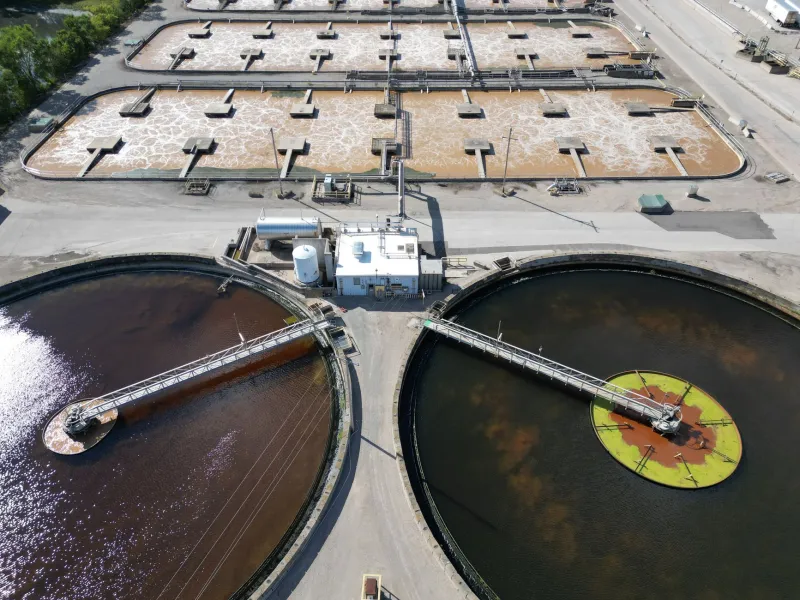
Every day, hundreds of millions of Americans flush, rinse, and drain synthetic materials into a network of pipes and treatment facilities that was never designed to intercept them. Wastewater treatment plants — the workhorses of American public health infrastructure — were conceived in an era when the dominant threats to water quality were bacterial pathogens, excess nutrients, and industrial chemicals. Plastic, in the fragmented, near-invisible form it now takes, was not part of the engineering equation. Decades later, that oversight is manifesting as a slow-motion contamination crisis playing out in rivers, estuaries, and coastal waters from Maine to the Gulf Coast.
The scale of the problem is difficult to overstate. A 2021 study published in Environmental Science & Technology estimated that a single large American wastewater treatment plant can release between 50 million and 15 billion microplastic particles into receiving waterways every single day, even after completing its full treatment cycle. Those are not particles that slip through due to equipment failure or operator error. They are particles that the system, functioning exactly as designed, simply has no mechanism to remove.
What Treatment Plants Were Built to Do — and What They Cannot
Conventional wastewater treatment in the United States follows a sequence developed primarily in the early to mid-twentieth century. Screens and settling tanks remove large solids. Biological processes consume organic matter. Disinfection kills pathogens. The treated effluent — called secondary or, in more advanced facilities, tertiary effluent — is then discharged into nearby water bodies under permits issued through the Clean Water Act's National Pollutant Discharge Elimination System.
Microplastics, defined as synthetic particles smaller than five millimeters, present a categorically different challenge. Many are already smaller than the openings in standard screening equipment. Others, particularly microfibers shed from synthetic textiles during residential laundry cycles, are thin enough to pass through filtration stages that would capture particles of equivalent mass but different geometry. Environmental engineers who work with municipal systems are candid about the structural mismatch.
"The treatment train we rely on was optimized for biochemical oxygen demand, nitrogen, and phosphorus," explained one environmental engineer with experience consulting for mid-sized municipal utilities in the Midwest. "Microplastics don't register on any of those metrics. They move through the system essentially as invisible passengers."
Research from the U.S. Geological Survey and several university-based environmental science programs has documented removal efficiencies at American treatment plants that, while appearing impressive in percentage terms, mask the severity of what remains. Plants achieving 98 or even 99 percent removal of microplastics still discharge enormous absolute quantities when processing tens of millions of gallons daily — volumes typical for facilities serving mid-sized American cities.
Fragmentation: When Treatment Makes Things Worse
Perhaps the most troubling dimension of this problem is not what treatment plants fail to capture, but what they may actively produce. Larger plastic fragments entering the sewage stream — food packaging remnants, personal care product residue, degraded synthetic materials — are subject to mechanical agitation, UV exposure in open settling basins, and biological activity throughout the treatment process. These forces accelerate the very fragmentation that transforms macroplastics into microplastics and, ultimately, into nanoplastics.
Nanoplastics, particles smaller than one micrometer, represent the frontier of scientific concern in aquatic toxicology. Their reduced size grants them access to biological pathways — cellular membranes, organ tissues, the blood-brain barrier — that larger particles cannot penetrate. Studies conducted in European treatment systems, which face analogous infrastructure constraints, have found elevated nanoplastic concentrations in effluent compared to influent, suggesting that the treatment process itself is a net generator of the smallest and potentially most hazardous particle class.
American researchers are only beginning to characterize this dynamic domestically, in part because standardized methods for detecting and quantifying nanoplastics in complex water matrices remain under development. The Environmental Protection Agency has acknowledged the measurement gap but has yet to establish binding nanoplastic monitoring requirements for permitted facilities.
The Biosolids Detour — and Its Downstream Consequences
One aspect of the microplastic-wastewater relationship that receives insufficient public attention is the fate of treatment plant biosolids. The sludge removed during the treatment process concentrates the plastics that are successfully intercepted — an outcome that sounds like a success story until one examines what happens next.
Approximately 60 percent of municipal biosolids in the United States are applied to agricultural land as fertilizer, a practice regulated under EPA's Part 503 rules. Those rules were written before microplastic contamination of biosolids was understood or measured. Studies now consistently document microplastic concentrations in biosolids ranging from tens of thousands to hundreds of thousands of particles per kilogram of dry weight. When this material is spread across farmland, precipitation events carry microplastics into surface runoff, tile drainage systems, and ultimately into the same rivers and coastal waters that treatment plants are permitted to protect.
The pathway is circular in the worst possible sense: plastics enter the sewage system, are concentrated in biosolids rather than destroyed, and re-enter aquatic environments through an agricultural intermediary that falls outside the regulatory purview of water quality agencies.
Infrastructure Investment and the Technology Gap
Advanced treatment technologies capable of meaningfully reducing microplastic discharge do exist. Membrane bioreactors, which replace conventional secondary clarifiers with fine membrane filtration, have demonstrated removal efficiencies exceeding 99.9 percent for particles above approximately 0.1 microns in pilot and operational studies. Rapid sand filtration, coagulation-flocculation processes, and advanced oxidation systems have each shown measurable efficacy in research settings.
The barrier is not technological imagination — it is capital and regulatory will. Upgrading a mid-sized American treatment plant to incorporate membrane bioreactor technology can cost tens of millions of dollars, a figure that strains municipal budgets already stretched thin by aging pipe networks, combined sewer overflow compliance obligations, and climate-driven infrastructure stress. Without federal funding mandates or regulatory requirements that specifically address microplastics, most utilities lack both the financial incentive and the legal obligation to invest.
The EPA's most recent proposed updates to effluent guidelines have not included microplastic-specific limits for municipal facilities. Advocacy organizations and environmental engineers have urged the agency to initiate formal rulemaking, but the regulatory timeline remains uncertain.
What a Genuine Solution Requires
Addressing the microplastic discharge problem at the treatment plant level demands action on multiple fronts simultaneously. Upstream source reduction — limiting the introduction of synthetic microfibers, plastic pellets, and fragmenting macroplastics into the sewage stream in the first place — reduces the burden on treatment infrastructure in ways that no engineering upgrade alone can fully replicate. Laundry filtration standards, extended producer responsibility frameworks for synthetic textiles, and stricter controls on industrial plastic handling all have direct implications for treatment plant influent quality.
At the facility level, the federal government must create a credible pathway toward microplastic effluent standards, paired with dedicated infrastructure funding that does not simply shift compliance costs onto ratepayers in lower-income communities already disproportionately burdened by environmental hazards.
And at the regulatory level, the biosolids-to-farmland pathway demands urgent attention as a recognized vector for aquatic plastic pollution — one that current law essentially ignores.
America's wastewater treatment infrastructure is a genuine public health achievement, one that has prevented incalculable suffering over the past century. But it is an achievement built for a different world. The plastic-saturated reality of the twenty-first century has outpaced the assumptions embedded in every settling tank, every screening bar, every discharge permit currently in force. Acknowledging that gap — clearly, honestly, and with the urgency the science demands — is the necessary first step toward closing it.