Inside the Fence Line: How Plastic Pellet Spills at U.S. Factories Are Poisoning Communities No One Is Watching
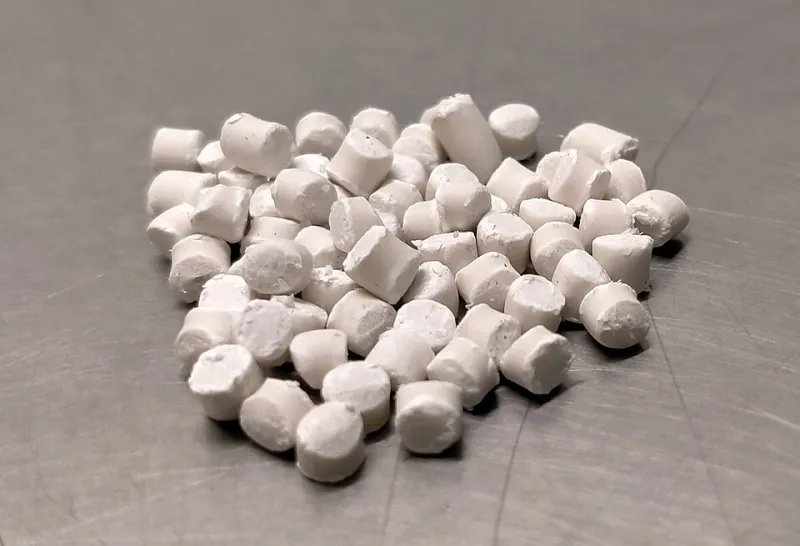
Photo: Gabriele85, CC0, via Wikimedia Commons
The photographs look almost benign — small, lentil-shaped pellets scattered across a gravel lot behind a plastics compounding plant in southern Louisiana. But those pellets, known in the industry as nurdles, are the foundational raw material of virtually every plastic product manufactured in the United States. And when they escape their intended containment — which, it turns out, happens with remarkable frequency — they become one of the most persistent and underregulated sources of plastic pollution entering American waterways.
Most public attention on nurdle contamination has focused on high-profile maritime spills, such as the 2021 X-Press Pearl disaster off Sri Lanka or documented losses from cargo vessels transiting U.S. ports. Those incidents are significant. But the quiet, cumulative leakage occurring at manufacturing plants, resin distribution warehouses, and rail transfer yards across the country may represent an equal or greater threat — one that largely escapes public scrutiny because it happens behind facility fences and beneath the threshold of federal reporting requirements.
A Raw Material With No Regulatory Home
Nurdles occupy a peculiar legal gray zone. They are not classified as hazardous waste under the Resource Conservation and Recovery Act. They are not subject to Superfund cleanup thresholds. The Clean Water Act prohibits the discharge of pollutants into navigable waters, but enforcement against pellet losses has been episodic at best, typically requiring citizen-filed complaints rather than proactive agency monitoring.
The Environmental Protection Agency does not require facilities to report nurdle spills unless the quantity meets a threshold established for listed hazardous substances — a standard nurdles do not meet under current classification. This means that a manufacturing plant losing thousands of pellets daily through floor drains, ventilation systems, and loading dock gaps may never appear in any public database, never trigger an inspection, and never face a fine.
"These are essentially invisible spills," said one environmental compliance attorney who works with Gulf Coast municipalities. "Because they don't meet the definition of a reportable release, they simply don't exist in the regulatory record, even when local residents are finding them in their ditches and drainage canals."
What Happens When Pellets Hit the Storm Drain
The pathway from factory floor to aquatic ecosystem is distressingly straightforward. Nurdles escape during loading and unloading operations, through gaps in conveyor systems, via HVAC exhaust, and from the wheels of forklifts and transport vehicles. At facilities that handle bulk resin — common throughout Texas, Louisiana, Ohio, and the Carolinas — even modest operational inefficiencies can translate to thousands of pellets entering the surrounding environment each day.
Once outside the facility boundary, pellets are carried by rain and stormwater runoff into drainage channels, retention ponds, and ultimately into streams, rivers, and coastal estuaries. Unlike larger plastic debris, they are nearly impossible to recover through conventional cleanup methods once dispersed. Their size — typically two to five millimeters — places them squarely in the microplastic range, meaning they pass through most filtration systems unimpeded.
In the environment, nurdles behave as what scientists call "toxicological sponges." Their polymer surfaces readily absorb persistent organic pollutants, heavy metals, and industrial chemicals from surrounding water and sediment. When ingested by fish, birds, or filter-feeding invertebrates, they deliver concentrated doses of those accumulated contaminants — a process well-documented in peer-reviewed literature and increasingly observed in species that form the base of commercial fisheries.
The Communities Bearing the Burden
The facilities generating the greatest pellet losses are not distributed evenly across the American landscape. They cluster in specific industrial corridors, and those corridors share a common characteristic: they are disproportionately located adjacent to lower-income communities and communities of color.
In St. James Parish, Louisiana — a stretch of the Mississippi River corridor known to local advocates as "Cancer Alley" — residents have documented pellet accumulation along drainage ditches that border residential properties for years. In parts of Harris County, Texas, community groups have photographed nurdles washing into Galveston Bay tributaries following heavy rain events. In portions of the Ohio River Valley, environmental monitors have recovered pellets from stream beds downstream of plastics compounding facilities.
For residents in these areas, the pellet problem is not an abstraction. It is visible evidence of an industrial system that externalizes its costs onto the people least equipped to absorb them. "We see them every time it rains," one community organizer in Louisiana explained. "They're in the gutters, they're in the ditches, they're in the bayou. And nobody seems to think that's their problem to fix."
The Rail Yard Dimension
Beyond manufacturing plants themselves, rail infrastructure presents a significant and poorly documented contamination vector. Nurdles are transported in bulk across the country in hopper cars and intermodal containers. Transfer yards, where cars are assembled, disassembled, and loaded, are sites of recurring spill events — many of which are never cleaned up because the responsible party is unclear and no regulatory mechanism compels remediation.
A 2023 analysis by a Gulf Coast environmental nonprofit documented pellet contamination at 14 of 17 rail transfer yards surveyed in Texas and Louisiana, with pellets present in adjacent drainage features at 11 of those sites. None of the contamination events had been reported to state environmental agencies. None had triggered cleanup orders.
What Meaningful Reform Would Require
Addressing this problem requires a layered policy response. At the federal level, advocates have long called for the EPA to formally classify nurdle spills above a defined quantity as reportable releases under the Clean Water Act, creating a paper trail that enables enforcement. Several legislative proposals, including iterations of what advocates have called "pellet pollution prevention" legislation, have been introduced in Congress but have stalled amid industry opposition.
At the state level, a small number of jurisdictions have moved independently. South Carolina enacted legislation in 2021 requiring plastic resin manufacturers to implement pellet containment plans and submit annual loss reports — the first such law in the country. Advocates point to this framework as a viable model for broader adoption.
Industry-led initiatives, such as Operation Clean Sweep, ask participating companies to voluntarily commit to pellet loss prevention. While participation is widespread on paper, the program lacks independent verification, and multiple investigations have found pellet contamination adjacent to facilities that claim to be enrolled.
The gap between voluntary commitment and verifiable outcome is precisely the space where communities pay the price. Closing that gap will require enforceable standards, transparent reporting, and the political will to treat pre-production plastic contamination with the same seriousness as any other industrial pollutant — regardless of what the current regulatory classification says.
Until that reckoning arrives, the pellets will keep moving: from factory floor to storm drain to stream to sea, one invisible spill at a time.