Coated in Compromise: The Hidden Chemical Threat Lurking Inside America's Water Treatment Pipes

For most Americans, the journey of tap water ends at the faucet. What few people consider is the labyrinthine infrastructure that water traverses before it arrives — miles of pipes, holding tanks, and treatment chambers, many of them lined with synthetic coatings engineered to prevent corrosion. These coatings are marketed as protective barriers. Increasingly, however, water quality scientists are raising uncomfortable questions about what those barriers are releasing into the very water they are designed to safeguard.
The issue is not the pipes themselves. It is what coats them.
The Chemistry Behind the Coating
Industrial protective coatings used in water treatment infrastructure are complex formulations. Epoxy resins, polyurethanes, and vinyl ester compounds are among the most commonly applied materials, chosen for their durability and resistance to the chemical stressors inherent in water treatment environments. What makes these coatings functional also makes them chemically dense: stabilizers, plasticizers, curing agents, and pigment dispersants are all embedded within the matrix of these materials.
Many of these additives belong to chemical families already associated with endocrine disruption and aquatic toxicity — bisphenol A (BPA) and its structural analogs, phthalate esters, and nonylphenol ethoxylates among them. Under stable conditions, these compounds remain largely bound within the coating matrix. The problem, researchers argue, is that stable conditions are rarely guaranteed inside aging water infrastructure.
Heat fluctuations, chlorination chemistry, pressure cycling, and simple mechanical wear all contribute to the gradual breakdown of these liners. As coatings degrade, their constituent chemical additives become mobile — migrating into the water column in concentrations that vary depending on pipe age, water temperature, and treatment chemistry.
A Lifecycle Nobody Is Tracking
The lifecycle of a water treatment pipe coating typically spans fifteen to thirty years under optimal conditions. In practice, America's water infrastructure is aging well beyond those thresholds. The American Society of Civil Engineers has repeatedly assigned the nation's drinking water systems a near-failing grade, noting that hundreds of thousands of miles of distribution pipes are operating past their engineered service lives.
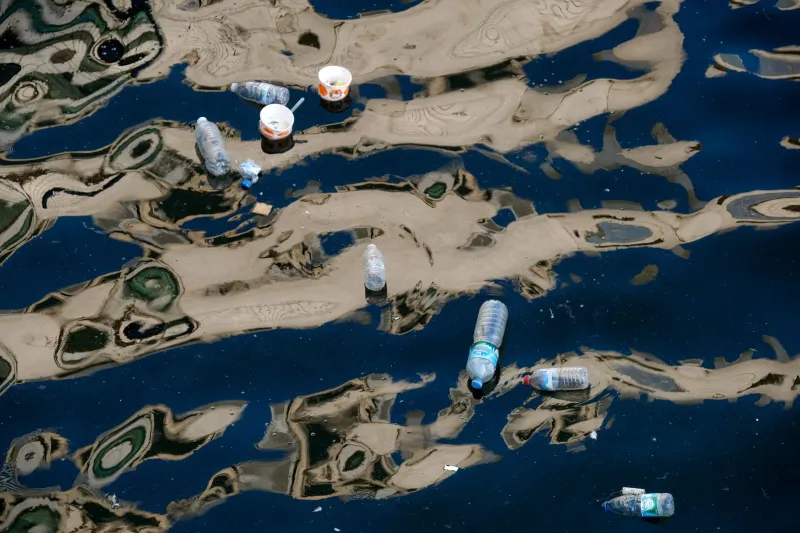
When coatings reach the end of their functional lifespans, they do not simply stop working. They begin to fail in ways that are difficult to detect from the outside. Microcracks propagate through the liner surface. Delamination allows water to infiltrate between the coating and the pipe substrate. In some cases, fragments of the coating material itself enter the water stream — a contamination pathway that bears striking resemblance to the broader microplastics crisis afflicting America's surface waters.
Dr. Melissa Hargrove, a water systems chemist affiliated with a Midwestern research university who asked that her institutional affiliation not be used pending a forthcoming publication, described the problem in stark terms. "We are essentially asking these coatings to perform indefinitely in chemically aggressive environments, and then expressing surprise when they begin to shed their chemistry into the water," she said. "The assumption has always been that the coating is inert once applied. The evidence suggests that assumption is increasingly untenable."
The Regulatory Blind Spot
Federal oversight of materials that come into contact with drinking water is fragmented across multiple agencies, with the Environmental Protection Agency holding primary authority under the Safe Drinking Water Act. NSF International, a nonprofit certification body, administers NSF/ANSI Standard 61, which establishes threshold limits for contaminants that can leach from materials in contact with potable water. Most pipe coatings used in municipal systems are certified under this standard.
Critics, however, argue that NSF 61 certification was never designed to account for the full complexity of coating degradation over extended service periods. The standard tests materials under controlled laboratory conditions that may not adequately replicate the chemical environment inside an aging municipal system. Moreover, the certification process evaluates individual compounds rather than the mixture effects that occur when multiple additives leach simultaneously — a significant gap given the emerging science around chemical cocktail toxicity.
Environmental attorney Rachel Solis, who has litigated water contamination cases in the Southeast, noted that the regulatory framework places the burden of proof squarely on affected communities. "The default assumption is that certified materials are safe," she said. "But certification is a snapshot in time. It does not account for what happens to that material five years after installation, or ten, or twenty. By the time contamination is detected, the damage is already done."
The EPA has acknowledged the limitations of existing frameworks in internal documents obtained through public records requests by advocacy organizations, but comprehensive rulemaking to address coating degradation as a distinct contamination pathway has not materialized.
What Utilities Know — and When They Know It
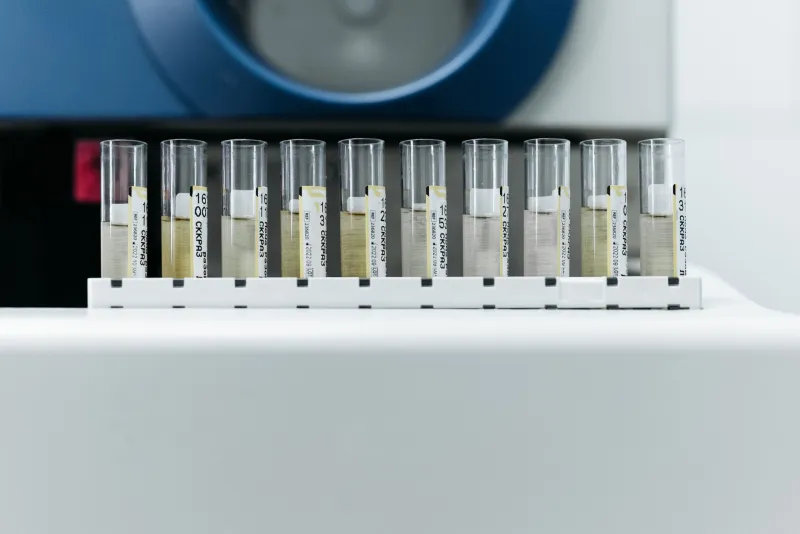
Municipal water utilities are required to conduct regular water quality monitoring under the Safe Drinking Water Act, but the parameters they test for do not always align with the specific chemical fingerprint of degrading pipe coatings. Utilities may detect elevated levels of total organic carbon or observe changes in disinfection byproduct formation — indirect indicators that something in the system is contributing organic chemistry to the water — without possessing the analytical tools or regulatory mandate to trace those signals back to their coating infrastructure.
Some larger utilities have begun investing in more granular chemical profiling of their distribution systems, driven in part by growing scientific literature on pipe-to-water contaminant transfer. But for the thousands of small and mid-sized water systems that serve rural and low-income communities across the country, that level of monitoring remains financially out of reach.
The disparity is not lost on environmental justice advocates. Communities that lack the resources to conduct comprehensive water quality surveillance are disproportionately likely to be served by aging infrastructure with degraded coatings — and least equipped to demand accountability when contamination is discovered.
Toward a More Honest Infrastructure Conversation
The path forward requires movement on multiple fronts. Advocates and researchers are calling for mandatory disclosure of all chemical constituents in pipe coating formulations, including additives that manufacturers currently classify as proprietary. They are also pushing for updated testing protocols under NSF 61 that simulate long-term degradation rather than pristine installation conditions.
Beyond regulatory reform, there is a growing argument for accelerating the transition away from synthetic polymer coatings in favor of materials with more benign chemical profiles — including ceramic linings, glass-fused coatings, and advanced cement composites that do not rely on plasticizer-laden formulations to achieve durability.
The infrastructure investment provisions embedded in recent federal legislation represent a genuine opportunity to retire the most compromised pipe systems and replace them with materials designed from the outset for chemical transparency. Whether that opportunity is seized depends on whether policymakers are willing to ask harder questions about what their constituents are drinking.
For now, the coatings remain in place, and the water keeps flowing through them. The chemistry they carry follows close behind.