Prescription for Pollution: How America's Pharmaceutical Packaging Is Fragmenting Into Its Waterways
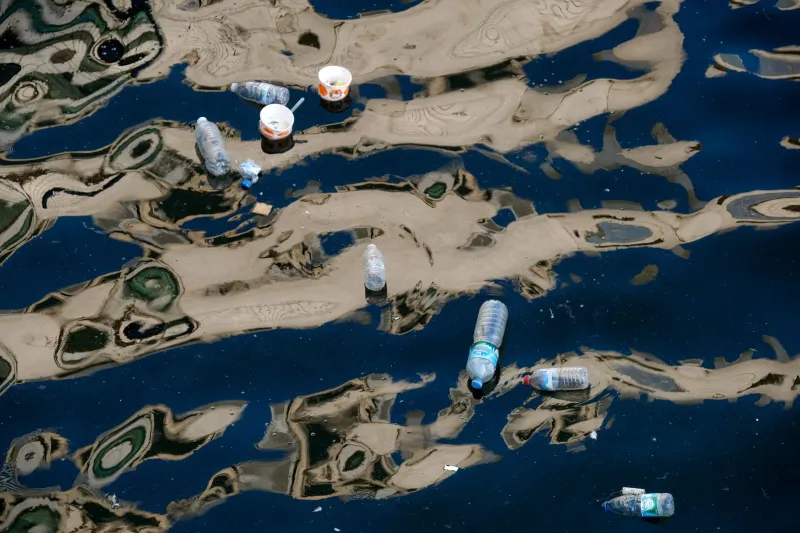
Every year, Americans fill roughly 6.6 billion prescriptions. Each of those transactions generates packaging—amber polyethylene terephthalate bottles, multi-layer blister packs laminated with polyvinyl chloride, polypropylene caps, and the rigid polymer casings encasing prefilled syringes and insulin pens. Most of this material is handled casually: tossed into household trash, flushed down toilets, or dropped into take-back bins that, more often than not, route directly to landfills with no specialized containment.
What happens next is poorly studied, inadequately regulated, and deeply consequential for aquatic ecosystems across the country.
A Packaging Problem Hiding Behind a Drug Problem
Public discourse around pharmaceutical contamination of waterways has focused almost exclusively on the active compounds themselves—the antidepressants, hormones, and antibiotics that pass through human metabolism and into sewage systems. That conversation, while important, has inadvertently obscured a parallel and arguably more durable crisis: the physical plastic infrastructure that delivers those drugs is also entering the water cycle, and it carries its own suite of chemical hazards.
Pharmaceutical-grade plastics are not generic commodity resins. They are engineered for chemical inertness, UV resistance, and barrier performance—properties achieved through the incorporation of specialized stabilizers, plasticizers, and slip agents that standard water treatment processes were never designed to remove. When these materials fragment, whether through mechanical stress in waste sorting facilities, UV degradation in open landfills, or simple physical abrasion in drainage systems, they release microplastic particles bearing chemical signatures distinct from those found in consumer packaging.
Researchers at the University of Georgia and several European institutions have identified pharmaceutical-specific polymer fragments in river sediment samples, though systematic monitoring in the United States remains limited. The U.S. Environmental Protection Agency does not currently require municipal water utilities to test for pharmaceutical microplastics as a discrete category, leaving a significant gap in the national contamination picture.
The Infrastructure Gap No One Is Funding
America's municipal wastewater treatment infrastructure was largely designed and built between the 1950s and 1980s, optimized to handle biological waste and conventional suspended solids. Microplastic particles—particularly those smaller than 100 microns—pass through primary and secondary treatment stages with troubling efficiency. Tertiary treatment systems capable of capturing fine particulates exist but are expensive to install and operate, placing them beyond the reach of many smaller utilities.
The burden falls disproportionately on communities that can least absorb it. Rural water systems serving populations under 10,000 frequently operate with single-stage treatment processes. Low-income urban districts often rely on combined sewer overflow infrastructure that, during heavy rain events, bypasses treatment entirely and routes raw sewage—along with whatever microplastics it carries—directly into receiving waterways.
A 2022 analysis by the Environmental Policy Innovation Center found that communities with median household incomes below $40,000 were more than twice as likely to receive drinking water from systems with documented infrastructure deficiencies. Pharmaceutical packaging fragments, concentrated in the effluent streams of these undertreated systems, are accumulating in the rivers, reservoirs, and aquifers that these same communities depend upon.
This is not an abstract equity concern. It is a measurable disparity in toxic exposure with no current federal remediation pathway.
Blister Packs: The Packaging No One Recovers
Among pharmaceutical packaging formats, blister packs deserve particular scrutiny. The dominant format for over-the-counter medications and a growing share of prescription drugs, blister packs are constructed from bonded layers of aluminum foil and PVC or PVDC film—a combination that is functionally unrecyclable through any curbside program currently operating in the United States.
Consumers who attempt to recycle these products almost universally fail. The material is too small to be captured by most sorting equipment, too compositionally complex to be economically processed, and too contaminated with drug residue to meet secondary market specifications. The overwhelming majority of blister packs enter the solid waste stream intact, migrate to landfills, and—through leachate generation or windblown dispersion—eventually find pathways into surface water and groundwater systems.
Once in aquatic environments, the PVC component is of particular concern. Polyvinyl chloride contains phthalate plasticizers and organochlorine stabilizers that leach readily into surrounding water, where they function as endocrine disruptors in fish and amphibian populations. Studies of freshwater fish downstream from landfill leachate discharge points have documented reproductive abnormalities consistent with phthalate exposure at concentrations well below those currently regulated under federal standards.
Injectable Devices and the Specialty Polymer Problem
The pharmaceutical packaging crisis extends beyond the pill bottle. The rapid expansion of self-administered injectable therapies—including biologics for autoimmune conditions, GLP-1 receptor agonists for diabetes and obesity management, and at-home fertility treatments—has introduced a new category of plastic medical waste into household disposal streams.
Autoinjector pens, prefilled syringes, and insulin delivery devices are constructed from engineering-grade polymers including polycarbonate, acrylonitrile butadiene styrene, and cyclic olefin copolymer. These materials are durable, chemically complex, and almost entirely absent from take-back or recycling programs. They are classified as sharps waste in clinical settings, requiring specialized disposal, but when dispensed to patients for home use, they typically enter standard household trash with no guidance and no infrastructure to support safer alternatives.
The volume is not trivial. The global market for injectable drug delivery devices exceeded $500 billion in 2023, with the United States accounting for the largest single national share. A meaningful fraction of that volume is ending up in municipal solid waste streams, landfill leachate, and ultimately in waterways where the polymers will persist for centuries.
What Accountability Could Look Like
The pharmaceutical industry has not been required to internalize the environmental cost of its packaging choices. Extended producer responsibility frameworks, which obligate manufacturers to fund end-of-life management for their products, have gained traction in several states for consumer packaging broadly but have not been systematically applied to pharmaceutical packaging specifically.
Legislative proposals at the federal level have stalled repeatedly. The Drug Enforcement Administration's existing medication take-back infrastructure, while valuable for managing active pharmaceutical compounds, does not address the physical packaging and provides no mechanism for tracking or treating the plastic materials involved.
Several advocacy coalitions are advancing a more comprehensive policy framework that would require pharmaceutical manufacturers to:
- Fund dedicated take-back programs with documented plastic capture and processing outcomes
- Phase out PVC-based blister packaging in favor of mono-material formats compatible with existing recycling infrastructure
- Report annually on packaging material volumes and end-of-life destinations
- Contribute to a dedicated infrastructure fund supporting tertiary treatment upgrades at water utilities serving disadvantaged communities
None of these measures is technically infeasible. Each is, however, commercially inconvenient for an industry accustomed to externalizing its material costs onto public systems and aquatic ecosystems.
The Patients Who Didn't Know They Were Polluters
It would be a misreading of this crisis to assign primary responsibility to individual patients. The person managing a chronic condition who disposes of a blister pack in the trash is not culpable for the infrastructure failures that allow that packaging to reach a river. The accountability chain runs through manufacturers who select non-recoverable materials, regulators who have not required alternatives, and legislators who have not funded the treatment upgrades that would intercept the damage already in motion.
But awareness matters. Patients who understand the environmental trajectory of their medication packaging are more likely to seek out take-back options, advocate for better programs, and support policy change. The first step is ending the silence around a contamination pathway that has been hiding in plain sight—one prescription at a time, in medicine cabinets across the country.