What's on Your Plate: The Invisible Plastic Contamination in America's Most Popular Seafood
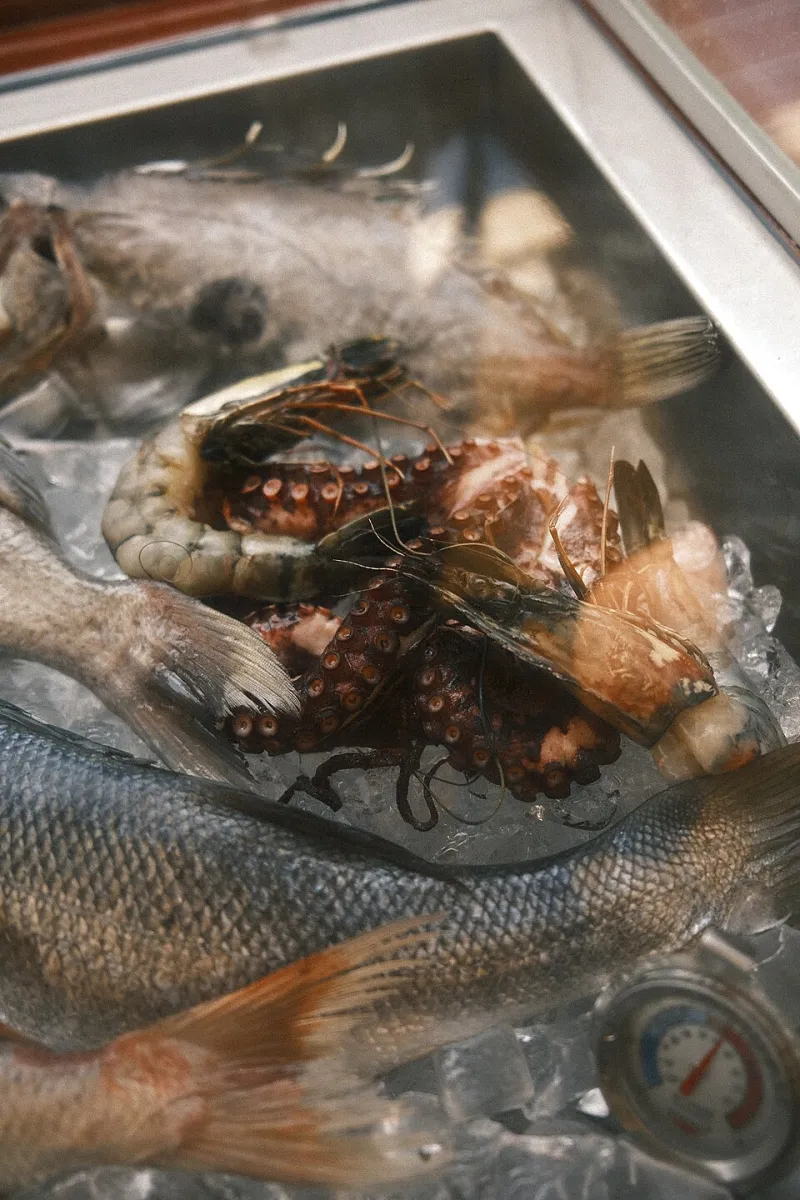
Photo: Shixart1985, CC BY 2.0, via Wikimedia Commons
Shrimp tacos on a Tuesday. Salmon fillets on a Friday. A tuna melt for lunch. For tens of millions of Americans, seafood is not an occasional indulgence but a dietary staple — recommended by nutritionists, celebrated by food culture, and assumed to be among the cleanest protein sources available. That assumption is now under serious scientific scrutiny.
A growing body of peer-reviewed research has established that microplastics — plastic particles smaller than 5 millimeters, many invisible to the naked eye — are present in a wide range of commercially harvested fish and shellfish sold in American markets. The implications for public health remain under active investigation, but the contamination itself is no longer in dispute.
How Plastic Enters the Food Chain
The pathway from ocean pollution to dinner plate is more direct than most consumers realize. The world's oceans now contain an estimated 170 trillion plastic particles, according to a 2023 analysis published in PLOS ONE. This plastic does not float inertly at the surface. It degrades under ultraviolet radiation and wave action into progressively smaller fragments — microplastics and, at even finer scales, nanoplastics — that disperse throughout the water column and accumulate in marine sediments.
Marine organisms ingest these particles through multiple mechanisms. Filter feeders such as mussels, oysters, and clams draw in enormous volumes of seawater and retain whatever particulates it contains, including plastic. Fish mistake small plastic fragments for prey, or consume prey items that have themselves ingested plastic. Zooplankton — the foundational link in most marine food webs — have been shown to ingest nanoplastics, which then biomagnify as they move up the trophic ladder.
The result is a contamination profile that varies significantly by species, feeding behavior, habitat, and geographic origin — distinctions that carry practical implications for American consumers trying to make informed choices.
Species-by-Species: What the Research Reveals
Not all seafood carries equivalent contamination risk. Understanding which species accumulate more microplastics — and why — is essential for evidence-based dietary guidance.
Bivalves (mussels, oysters, clams) consistently show the highest microplastic concentrations in research literature, precisely because they are consumed whole, digestive tract included. A 2020 study in Environmental Science & Technology found that the average American who regularly eats shellfish may ingest up to 11,000 microplastic particles per year through that source alone. Farmed bivalves from cleaner water sources tend to show lower contamination than wild-harvested specimens from industrialized coastlines.
Canned tuna, one of the most consumed seafood products in the United States, has been detected with microplastics in multiple studies. As a larger pelagic fish, tuna accumulates plastic through consumption of smaller contaminated prey. The FDA's own sampling data, while limited in scope, has confirmed microplastic presence in commercial tuna products.
Farmed Atlantic salmon presents a more nuanced picture. While aquaculture environments can introduce plastic through feed pellets and equipment, farmed salmon generally shows lower microplastic burdens than wild-caught species feeding in heavily polluted open-ocean environments — though this advantage varies considerably by farming operation and geographic location.
Wild-caught Pacific salmon species, including sockeye and Alaskan coho, have demonstrated relatively lower contamination levels in several studies, reflecting the comparatively cleaner waters of the North Pacific and the species' feeding habits. Alaskan fisheries, subject to strict federal management, are frequently cited by researchers as representing lower-risk options.
Shrimp, America's single most consumed seafood by volume, is caught or farmed across a wide range of environments with dramatically different contamination profiles. Gulf of Mexico wild-caught shrimp face exposure to one of the most plastic-polluted bodies of water in the Western Hemisphere. Imported farmed shrimp from Southeast Asian aquaculture operations carries its own set of contamination and oversight concerns.
The Health Question: What We Know and Don't Know
The honest answer to the question of what microplastic ingestion means for human health is: researchers are still working to find out, and the preliminary findings are cause for precaution rather than panic.
Microplastics function as both physical contaminants and chemical vectors. The particles themselves can carry adsorbed pollutants — persistent organic pollutants, heavy metals, endocrine-disrupting compounds — that may leach into tissue upon ingestion. Laboratory studies on cell cultures and animal models have associated microplastic exposure with inflammatory responses, oxidative stress, and disruption of hormonal signaling pathways.
Human epidemiological data remains limited, but a landmark 2024 study published in the New England Journal of Medicine detected microplastics in the carotid artery plaque of cardiac patients and found a statistically significant association with elevated cardiovascular risk — a finding that prompted considerable attention from the medical community.
Public health authorities including the FDA and the World Health Organization have characterized current evidence as insufficient to establish definitive risk thresholds for dietary microplastic exposure, while acknowledging that the science warrants continued monitoring. That is a measured institutional response — but it should not be mistaken for reassurance.
Practical Guidance for American Consumers
Given the state of the evidence, what can Americans who eat seafood regularly do to reduce their exposure while maintaining a nutritious diet?
Prioritize Alaskan and Pacific Northwest wild-caught species. Alaskan sockeye salmon, Pacific halibut, and Pacific cod consistently appear in lower-contamination categories across research literature. These fisheries are federally managed under some of the most rigorous sustainability standards in the world, and their remote geographic origin limits exposure to the densest concentrations of ocean plastic.
Reduce consumption of whole shellfish from industrialized coastlines. If bivalves are a dietary staple, sourcing from certified clean-water aquaculture operations and limiting frequency can meaningfully reduce microplastic intake. Shellfish from the Pacific Northwest, subject to stringent water quality standards, are generally preferable to those harvested near major urban discharge points.
Be selective with canned tuna. Skipjack tuna, used in most light canned tuna products, is a smaller, shorter-lived species that accumulates fewer contaminants overall than albacore or bluefin. It represents a lower-exposure choice within the canned tuna category.
Ask questions at the point of purchase. Fishmongers, grocery seafood counters, and online sustainable seafood retailers are increasingly equipped to answer questions about origin, harvest method, and certification status. The Marine Stewardship Council (MSC) and Monterey Bay Aquarium's Seafood Watch program both provide consumer-facing tools for evaluating seafood choices across health and sustainability dimensions.
The Larger Obligation
Individual consumer choices, while meaningful, address only the demand side of a supply-side crisis. The microplastics accumulating in American seafood are there because the oceans are saturated with plastic waste — waste generated by industrial production, inadequate waste management infrastructure, and decades of policy failure.
Reducing the contamination burden on the seafood supply ultimately requires reducing the flow of plastic into aquatic environments: stronger regulations on single-use plastics, investment in domestic recycling infrastructure, accountability for plastic producers, and international cooperation on marine debris. The dinner plate and the ocean are not separate systems. What enters one will eventually appear in the other.